MLB Strikeout Odds and Pitcher K Prop Prices
 Available in US
Table of Contents
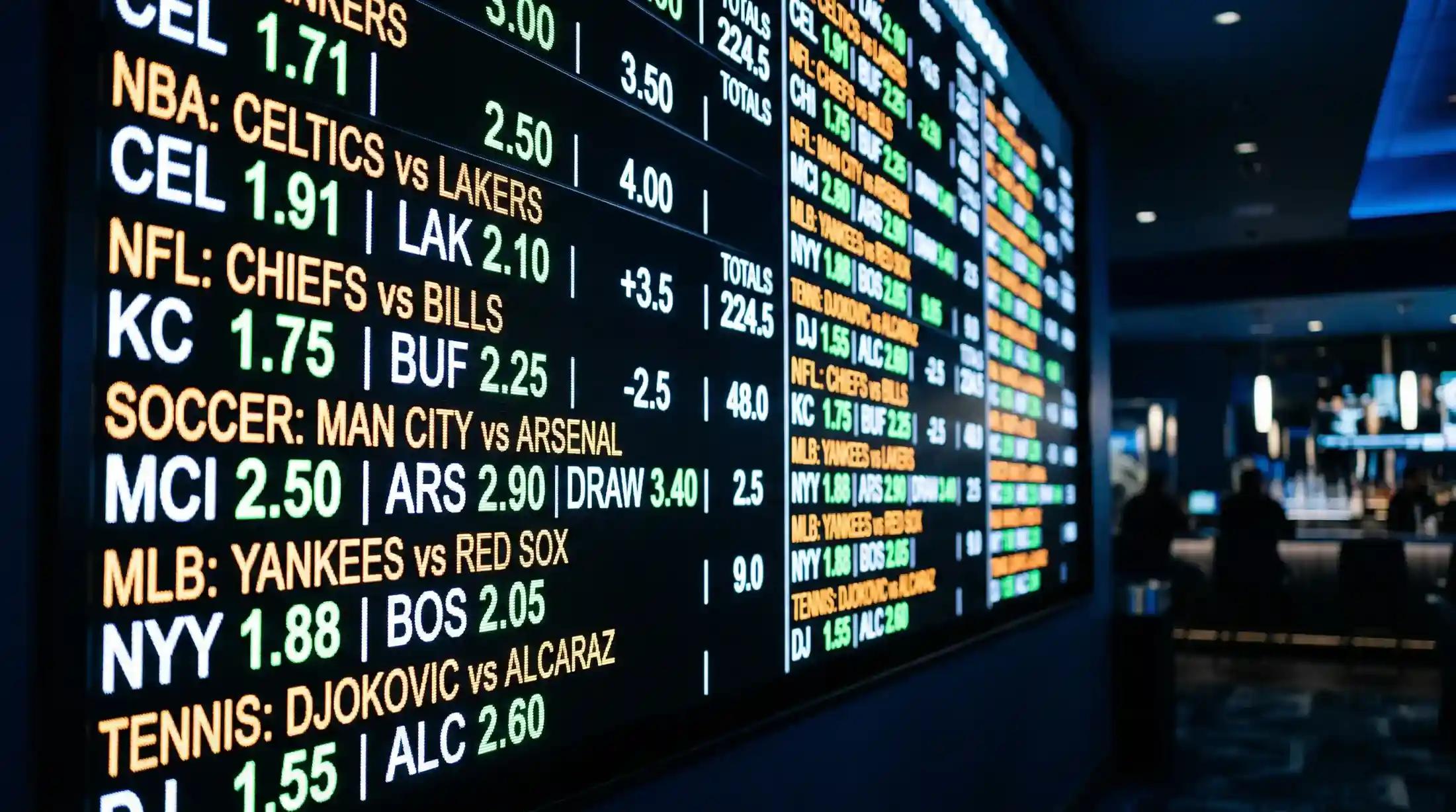
Comparing American and Decimal Pitcher K Prop Odds
The first time I tried to bet an MLB strikeout prop from a UK sportsbook, I spent ten minutes staring at the screen trying to figure out whether 1.91 was a good price. I knew what -110 meant in American format — I had been reading US-based analysis for years — but translating that into the decimal odds my sportsbook displayed was a skill I had never bothered to learn. That gap between consuming US-centric analysis and actually placing bets on a UK platform cost me time, money, and a few opportunities I should have caught.
The UK sports betting market generated GBP 2.48 billion in annual Gross Gambling Yield in 2025, and the competitive landscape among operators means that MLB prop coverage is expanding. More platforms are listing pitcher strikeout markets, more games are covered, and more alt lines are available than at any point in the past five years. The proliferation of prop bets and same-game parlays has been a key driver of that market growth, pushing operators to widen their offerings beyond the traditional football and horse racing core.
This guide is built for UK bettors who want to navigate the strikeout odds landscape efficiently. From converting American odds to decimal, to comparing prices across platforms, to understanding when and where K-prop lines open — the goal is to eliminate the friction that sits between your analysis and your bet slip.
Once you understand how to read the lines, the next logical step is to calculate expected value on MLB strikeout props to ensure long-term profitability.
Reading Strikeout Prop Odds: American vs Decimal Format
Most MLB analysis, picks columns, and strategy content comes from the US, where odds are expressed in American format. UK sportsbooks display decimal odds. If you cannot translate fluently between the two, you are handicapped before you even start evaluating a bet.
American odds come in two flavours. Negative numbers like -110 tell you how much you need to stake to win 100 units. So -110 means you risk 110 to win 100, for a total return of 210. Positive numbers like +150 tell you how much you win on a 100-unit stake — a +150 bet returns 250 on a 100-unit wager. The sign tells you which side the sportsbook considers more likely: negative odds indicate the favoured outcome, positive odds indicate the underdog.
Decimal odds, used across the UK and Europe, express the total return per unit staked. A price of 1.91 means you get back 1.91 for every 1.00 you bet, which includes your original stake. Your profit is 0.91 per unit. A price of 2.50 returns 2.50 per unit, with a profit of 1.50. The conversion is straightforward once you know the formulas.
For negative American odds, divide the absolute value by itself plus 100, then invert. So -110 converts to: 1 + (100 / 110) = 1.909, which rounds to 1.91 in decimal. For positive American odds, add 100 to the number and divide by 100. So +150 converts to: (150 + 100) / 100 = 2.50 in decimal. Standard K-prop odds of -110 on both sides translate to 1.91 decimal on both sides.
Alt strikeout lines offer more varied odds. A common ladder might show the over at the standard line (-110 / 1.91), then an alt over one strikeout higher at +150 (2.50 decimal), another at +300 (4.00), and a longshot at +750 (8.50). Those decimal equivalents make it easier to calculate your potential return and compare prices across UK platforms, which is the step that actually matters for your bottom line.
I keep a small conversion table on my phone for the most common K-prop odds I encounter. After a few weeks of active betting, the conversions become automatic — you stop thinking “what is -125 in decimal?” and start recognising 1.80 as the equivalent without calculating. Until that fluency develops, having the table handy prevents costly miscalculations during the narrow window when early lines are at their softest.
Beyond the basic conversion, understanding implied probability is the next step. Every decimal price maps to a probability: divide 1 by the decimal odds. So 1.91 implies a 52.4% probability; 2.50 implies 40%; 4.00 implies 25%. These implied probabilities include the sportsbook’s margin, so the “true” probability of each outcome is slightly lower than the implied figure. But the implied probability gives you a benchmark to compare against your own projection. If you believe an over hits 57% of the time and the sportsbook’s implied probability is 52.4%, the gap between those numbers is where your edge lives. Without fluency in implied probability, you cannot evaluate whether a line offers value — you can only evaluate whether the pitcher “feels” like an over, which is a recipe for break-even results at best.
UK-Licensed Platforms Offering MLB Strikeout Props
Not every UK sportsbook treats MLB the same way. Some operators list strikeout props for every game on the schedule. Others only cover nationally televised US games or high-profile matchups. A few do not offer individual pitcher props at all, limiting their MLB coverage to moneylines and run totals. Knowing which platforms offer what — before you need to place a bet — is the kind of boring preparatory work that saves you from scrambling at 6pm when the line you want is only available on a platform where you do not have an account.
The broader trend is encouraging for MLB prop bettors in the UK. Andrew Rhodes, CEO of the UK Gambling Commission, noted at a recent industry briefing that operators are widening their sports offerings, with US-based sports like NFL, NBA, and baseball growing in popularity alongside the traditional football and horseracing core. That widening means more competition among operators on MLB markets, which translates to better odds and deeper prop coverage for bettors.
When evaluating a platform for K-prop betting, I look at four things beyond the obvious requirement of holding a UKGC licence. First, coverage depth: does the platform list K props for all fifteen daily games or only a handful? Depth matters because the best value often appears in midweek games between small-market teams — games that only fully stocked platforms will bother to price. Second, line availability timing: some platforms post K props twelve hours before first pitch, while others wait until four or five hours before. Early access gives you a shot at softer opening lines before sharp action moves them.
Third, alt line availability. Standard over/under 5.5 at -110 is table stakes — the real value in K-prop betting often lives in alt lines, where a sportsbook offers the over at higher thresholds with correspondingly better odds. A platform that only offers the standard line is limiting your strategic options. Fourth, the platform’s odds competitiveness on the props it does offer. A platform can list every game’s K props and still price them uncompetitively. Comparing the same bet across three platforms takes less than a minute and routinely uncovers price differences of 0.05 to 0.15 in decimal terms — differences that compound into meaningful ROI over a season.
The UKGC’s 2025 reduction of financial check thresholds from GBP 500 to GBP 150 in net deposits over thirty days is worth noting here. The lower threshold means that UK bettors who are active across multiple sportsbooks — which is exactly what effective line shopping requires — may trigger affordability checks more quickly than before. This does not prevent you from betting, but it does mean you should be prepared for the documentation process and factor it into your account management across platforms.
Comparing Prices: Why the Same K Prop Costs Different Amounts
Two sportsbooks. Same pitcher. Same game. Same over 5.5 strikeouts. One prices it at 1.91 decimal. The other at 1.83. Why?
The difference comes down to how each operator builds its book. Sportsbooks use different models, ingest data at different speeds, respond to sharp action with different sensitivity, and target different hold percentages. A platform that caters primarily to recreational bettors may set wider margins on prop markets because its customer base is less price-sensitive. A platform that attracts sharper bettors may offer tighter margins to stay competitive but adjust lines more aggressively when money comes in on one side.
The practical impact of price differences is more significant than most bettors realise. The gap between 1.91 and 1.83 on a one-unit bet is 0.08 units of return. That sounds trivial. But across 300 K-prop bets in a season — a reasonable volume for a daily bettor — consistently getting 1.91 instead of 1.83 adds 24 units of additional return. At a GBP 20 unit size, that is GBP 480 in extra profit from the same bets with the same outcomes, simply because you placed them at a better price.
I compare prices on every single bet. No exceptions. The process takes about ninety seconds: I check three platforms, note the best available price, and place the bet there. Over time, I have noticed patterns. Certain platforms consistently offer the best prices on K-prop overs, while others are more competitive on unders. One platform I use tends to post softer lines on pitchers who are not household names — the mid-rotation starters who do not attract much public attention. Another platform is sharper on big-name pitchers but occasionally misprices matchups involving teams that UK bettors are less familiar with.
Standard K props usually carry odds around -110 on both sides — that is 1.91 in decimal. But alt lines introduce a wider range: an over set one strikeout above the standard line might be priced at +150 (2.50), with higher alt overs reaching +300 (4.00) and +750 (8.50). The price divergence between platforms tends to be wider on alt lines than on standard lines, which means the payoff from line shopping is even greater when you are betting the ladder.
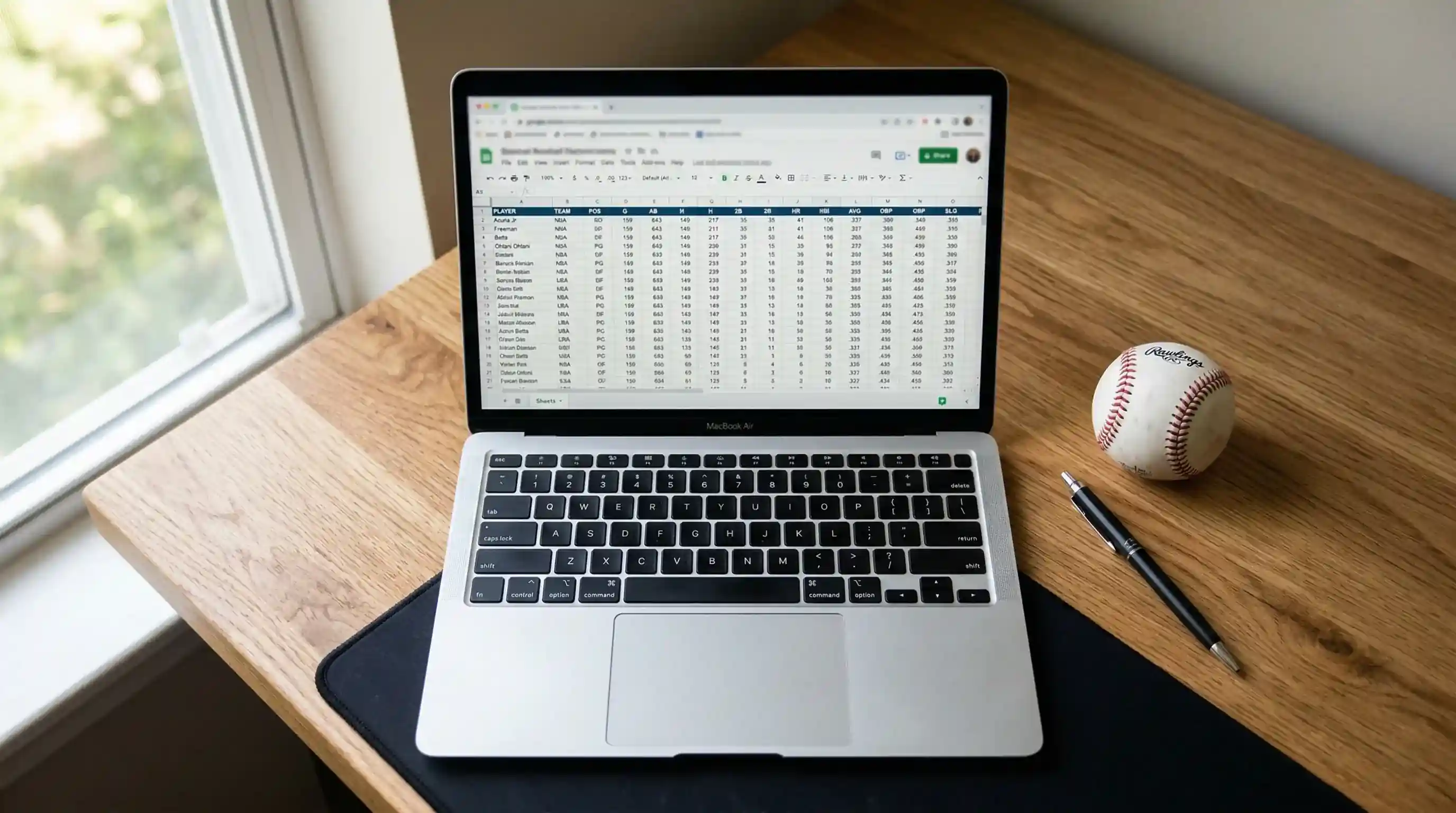
I track which platform offered the best price on each bet I place in a simple spreadsheet column. After a month, patterns crystallise. One platform consistently leads on overs for NL pitchers; another tends to lag on alt lines by fifteen to twenty minutes, which creates a window where its number has not yet caught up to the market. These patterns are not permanent — operators adjust their models and margins throughout the season — but they are stable enough across a six-week window to inform your default search order. Checking the historically best platform first, rather than cycling through all three every time, shaves time off the process without sacrificing accuracy.
For daily updates and advanced metrics, make sure to bookmark the leading MLB strikeout prop betting platform before the first pitch.
Extracting Expected Value from Odds Differences
Finding a better price is nice. Knowing whether that price actually offers positive expected value is what separates recreational bettors from profitable ones.
Expected value starts with implied probability. Every set of odds implies a probability that the outcome will occur. At 1.91 decimal, the implied probability is 1 / 1.91 = 52.4%. At 2.50 decimal, it is 1 / 2.50 = 40.0%. These implied probabilities include the sportsbook’s margin, so they overstate the true probability — but they tell you what the market believes about the likelihood of the outcome.
To find your edge, you need your own probability estimate. If your model says a pitcher’s over 5.5 hits 57% of the time and the sportsbook prices it at 1.91 (implying 52.4%), your edge is roughly 4.6 percentage points. The EV calculation confirms it: (0.57 x 0.91) – (0.43 x 1.00) = 0.5187 – 0.43 = +0.0887 per unit. That means every unit you bet on this line returns an expected profit of nearly nine pence. Over hundreds of bets, that edge compounds into real money.
Now consider what happens when you find a better price on the same bet. Another platform offers 1.95 instead of 1.91. Your edge calculation shifts: (0.57 x 0.95) – (0.43 x 1.00) = 0.5415 – 0.43 = +0.1115 per unit. The better price increased your per-bet EV by 25%. Same analysis, same matchup, same pitcher — but a meaningfully higher return because you placed the bet at a better number.
The key insight here is that EV is a function of both your probability estimate and the price you receive. You cannot control the first with perfect precision — every model has uncertainty built in. But you can control the second simply by checking multiple platforms before placing the bet. Line shopping is not a nice-to-have; it is a direct lever on your expected value that costs nothing but ninety seconds of effort per bet. For a deeper dive into calculating EV on K props step by step, the comprehensive strategy guide walks through the full framework.
When Odds Open and When to Strike
Timing is the most underappreciated variable in K-prop betting. Not the timing of the game — the timing of your bet relative to when the line was posted.
Most sportsbooks open MLB K-prop lines somewhere between ten and fourteen hours before first pitch. For a 7:10pm ET start in the US, that means lines typically appear between 5am and 9am ET, which translates to roughly 10am to 2pm UK time. The exact timing varies by operator — some platforms post all props at once in a batch, while others roll them out game by game over the course of the morning.
The opening window is when lines are at their softest. The sportsbook’s model has produced a number, but the market has not yet had a chance to test it. Sharp bettors have not placed their initial wagers. Lineup cards have not been confirmed. Late-breaking information — a bullpen session that went poorly, a minor groin tightness that surfaces during batting practice — has not yet filtered into the price. If your pre-game analysis identified a pitcher as a strong over candidate the night before, the opening line is your best shot at the most favourable price.
DraftKings integrated AR overlays for visualising player props in its 2025 app update, and other platforms have similarly invested in making prop markets more accessible and engaging. The result is that more recreational money flows into K-prop markets earlier in the day, which can sometimes push lines in predictable directions. When a high-profile pitcher is starting and the over is the obvious recreational play, early public money tends to steepen the over’s price. If you have already placed your bet at the softer opening number, that subsequent movement works in your favour — your line is now better than what the market is offering.
The second important timing window arrives about ninety minutes before first pitch, when lineup cards are confirmed. If a lineup change materially affects the matchup — a high-K batter scratched, a lefty-heavy lineup thinned out by a rest day — the K-prop line will adjust. But the adjustment is not always immediate. I have consistently found a fifteen-to-thirty-minute lag between lineup confirmation and the sportsbook’s line response, particularly on platforms that rely on slower model updates. That window is narrow, but for a prepared bettor who already has the game on his shortlist, it is wide enough to act.
My daily rhythm has settled into a two-touch approach. First touch in the morning: screen the slate, identify candidates, check opening lines. Second touch in the afternoon, once lineups are confirmed: verify the matchup still holds, compare prices, place the bet. If the opening line was soft and the matchup checks out, I bet at the first touch. If I need lineup confirmation to feel confident, I wait for the second. Either way, I almost never bet within an hour of first pitch unless a stale line has appeared — by that point, the market has had all day to sharpen the number, and the edge has usually evaporated.
Weekends introduce a wrinkle. Saturday slates often include early-afternoon US starts, which means those games’ K-prop lines may open as early as 8am UK time and close by early evening. Sunday is even trickier because of the lineup volatility issue — managers rest regulars on Sundays, and the lineup cards that drop ninety minutes before first pitch can invalidate an analysis you completed in the morning. I have learned to treat weekend betting with an extra layer of caution, holding off on any final commitment until lineup confirmation even when the opening price is tempting. The extra patience has cost me a few basis points on entry price but saved me from significantly more losing bets caused by unexpected lineup swaps.
FAQ
How do I convert American odds to decimal for MLB strikeout props?
For negative American odds like -110, divide 100 by the absolute value and add 1. So -110 becomes 1 + (100/110) = 1.91 decimal. For positive American odds like +150, divide the number by 100 and add 1. So +150 becomes 1 + (150/100) = 2.50 decimal. The most common K-prop price of -110 equals 1.91 in decimal, and alt line prices of +150, +300, and +750 convert to 2.50, 4.00, and 8.50 respectively.
Do all UK sportsbooks offer the same range of strikeout prop lines?
No. Coverage varies significantly across UK-licensed platforms. Some operators list K props for every MLB game on the schedule, while others only cover marquee matchups or nationally televised US games. Alt strikeout lines — the higher-threshold overs at longer odds — are even less consistently available. Before the season starts, check which of your platforms offer the depth of K-prop coverage you need, and open accounts at any additional operators that fill the gaps.
At what time do MLB strikeout odds typically open for UK bettors?
K-prop lines usually appear between 10am and 2pm UK time for standard evening games in the US. The exact timing depends on the operator — some batch-release all props at once, while others roll them out game by game. Lines for earlier US start times, such as 1pm ET day games, may open as early as 8am UK time. The opening window offers the softest prices before sharp action and public money begin moving the lines.
Created by the ”mlb Strikeout Prop Bets” editorial team.