Profitable MLB Strikeout Prop Betting Strategies
 Available in US
Table of Contents
- Applying Matchup Filters and Pitcher Metrics for K Props
- The Four-Filter Pipeline: From 15 Games to 2 Bets
- Using Moneyline and Game Total as Market Signals
- Form Signals: What to Check in the Last 3 Starts
- The Pre-Bet Checklist: 6 Questions Before Every K Prop
- Five Mistakes That Sink Strikeout Prop Bettors
- Why You Need a Results Log
- FAQ

Applying Matchup Filters and Pitcher Metrics for K Props
I lost money on strikeout props for two full seasons before I started making it back. Not because I picked the wrong pitchers — I actually had a decent eye for talent. The problem was that I had no system. I’d wake up, scroll through the day’s slate, spot a name I liked, hammer the over, and move on. Some days I’d bet six games. Other days, none. My results were a coin flip dressed up as analysis.
The moment things changed was when I stopped treating K props like a daily lottery and started treating them like a pipeline. A repeatable, filterable, documented process that turns fifteen scheduled games into two or three bets I genuinely believe in. That shift — from instinct to framework — is the entire point of this article.
The proliferation of prop bets and same-game parlays has been one of the key drivers of betting market growth, pushing US sports betting revenue to a record $16.96 billion in 2025. That growth means more markets, more liquidity, and more mispriced lines for those willing to do the work. Michael Rathburn, one of the sharper MLB analysts I’ve followed over the years, put it plainly: strikeout prop lines are not as sharp as traditional moneylines or over/unders, and if you dig into what is not built into the lines, you can exploit them for profit.
What follows is the framework I use every single day during the MLB season. It is not a magic formula. It is a structured method for identifying value, filtering noise, and placing bets with a genuine edge. Whether you are placing your first K prop or your five-hundredth, this process will sharpen your approach and, more importantly, make your results measurable.
To refine your approach further, consider building a 7-point system for strikeout props that accounts for weather, umpires, and recent form.
The Four-Filter Pipeline: From 15 Games to 2 Bets
On a typical MLB weekday, the schedule serves up twelve to fifteen games. That is somewhere between twenty-four and thirty starting pitchers, each with a strikeout prop line waiting for your money. Betting all of them is lunacy. Betting none of them because nothing feels right is waste. The pipeline exists to narrow thirty options down to the two or three that actually deserve your attention.
I run four filters, in order, every morning before the lines have moved much. Each filter eliminates roughly half of whatever survived the previous one. By the end, I am left with a manageable shortlist that I can research deeply rather than skimming shallowly.
Filter 1: Pitcher baseline. Does the starting pitcher have a swinging strike rate above 11% and a K% above 24% over his last ten starts? These are not arbitrary thresholds — they represent the floor at which a pitcher consistently generates enough whiffs to make the over worth considering. If a pitcher falls below both, he is off my board regardless of matchup. This single filter usually eliminates about a third of the slate.
Filter 2: Opponent K-rate. I check the opposing team’s overall strikeout rate against the pitcher’s handedness. A right-handed pitcher facing a lineup that strikes out at 26% or higher against right-handers stays on the board. If the opposing lineup is disciplined — below 22% — I need something extraordinary from the pitcher’s own numbers to keep the game alive. CLEATZ built a useful seven-factor scoring model that includes opponent K% as one of its weighted inputs, and I lean on a similar logic: the pitcher’s stuff and the opponent’s vulnerability must both clear a minimum bar.
Filter 3: Pitch count runway. Even the filthiest stuff in baseball means nothing if the manager pulls his starter after seventy-five pitches. I check the pitcher’s average pitch count over his last three outings. If he has been lifted early twice in his last three starts — whether due to injury management, blowout scores, or a short leash from the bullpen coach — I fade the over. A pitcher needs runway to rack up strikeouts, and this filter catches situations where the ceiling is artificially capped.
Filter 4: Line value. The first three filters tell me whether the over is likely. This filter tells me whether it is worth it. I compare my projected strikeout total to the line being offered and check whether the implied probability leaves room for edge. If the line is set at 5.5 and I project the pitcher to hit 6.2, that is a gap worth exploiting. If I project 5.7, the vig eats most of my edge. This is where the pipeline shifts from analysis to arithmetic, and it is where most casual bettors never arrive because they stop at “this pitcher is good.”
After running the four filters on a fifteen-game slate, I typically land on two to four games. Some days, none survive. That is fine — I have had weeks where I placed only six bets total and still finished ahead because every one of them cleared the pipeline cleanly. Discipline is not glamorous, but it is the entire reason the pipeline works. The bettors who lose money on K props are not the ones who picked the wrong pitcher — they are the ones who skipped the filters and bet on volume instead of value. If you take nothing else from this piece, take the pipeline. Build it, trust it, and resist the urge to override it when your gut says otherwise.
Using Moneyline and Game Total as Market Signals
Here is something that took me years to figure out, and I am almost embarrassed to admit it: the moneyline and game total are telling you exactly how the market views the pitcher’s K prop — you just have to listen.
Think about it this way. When a starting pitcher is a heavy favourite — say, -180 or steeper — the market is saying he is likely to pitch deep into the game. A starter who goes seven innings faces the batting order three times, which means more plate appearances and more opportunities to pile up strikeouts. At the same time, when the game total is set low — under 7.5 — the market is telling you that offence is expected to struggle. Low-scoring environments usually mean pitchers are dominant, counts go deeper, and batters swing and miss more often.
The sweet spot for K prop overs sits at the intersection of these two signals: a heavy favourite in a low-total game. Rathburn’s approach to K props centres on exactly this logic — use the moneyline plus the game total to identify market value, because a high favourite combined with a low total creates a favourable situation for the starter’s strikeout prop. His tracked record of 19-6 over a documented stretch speaks to how well this correlation holds up in practice.
I have turned this into a simple mental shortcut. Before I even look at the K line itself, I check two numbers: the moneyline and the total. If the pitcher is -160 or better and the total is 7.5 or lower, the game earns a green flag in my pipeline. If the pitcher is an underdog and the total is 9 or higher, that is a red flag for the over — the market is pricing in a game where the starter may not last long enough, or where offensive conditions inflate scoring and shorten outings.
What makes this signal so valuable is that it is hiding in plain sight. Every sportsbook publishes the moneyline and game total hours before K props are even available. You can pre-screen your slate before strikeout lines are posted and have your shortlist ready the moment those props appear. That head start matters because early lines tend to be slightly softer than lines that have been sharpened by afternoon action.
One important caveat: correlation is not causation, and this signal is not perfect. A pitcher can be a massive favourite in a low-total game and still get pulled after four innings because of a high pitch count or a minor tweak. The moneyline-total correlation works as a filter, not a conclusion. It tells you where to look, not what to bet. The actual bet decision still requires checking the pitcher’s metrics, the opponent’s K-rate, and the line value itself.
Form Signals: What to Check in the Last 3 Starts
Season-long averages are comfortable. They smooth out the noise, they look authoritative on a stat page, and they lie to you about what is happening right now. I learned this the hard way when I kept backing a pitcher whose season K/9 looked elite but whose last three outings told a completely different story — he had quietly lost two ticks on his fastball and his slider had gone flat.
When I assess recent form, I run through a quick checklist for the pitcher’s last three starts. First: did his swinging strike rate hold steady or decline? A pitcher who posted 14% SwStr% across the season but dropped to 9% in his last three outings is flagging a problem, whether it is fatigue, a mechanical adjustment, or a grip issue in cold weather. Second: how deep did he go? If a starter who normally throws ninety-plus pitches was pulled at seventy in two of his last three, the manager is watching something I should be watching too. Third: what was the quality of opposition? Three consecutive starts against top-ten K-rate lineups will inflate recent K totals; three against disciplined lineups will suppress them.
I keep this section brief for a reason. The detailed breakdown of how to weigh recent form against volume — when recency matters more, when it misleads, and how to blend the two — lives in a dedicated analysis of pitcher recent form and K props. For the purposes of this strategy framework, the principle is simple: always check the last three starts before trusting the season line, and treat any sharp drop in SwStr% or pitch count as a yellow flag that demands further investigation before placing the bet.
The Pre-Bet Checklist: 6 Questions Before Every K Prop
Every bet I place passes through six questions. Not five, not seven — six. I landed on this number after months of tracking which factors actually moved my win rate and which were noise I kept checking out of habit. If any question returns a “no” without a compelling override, the bet does not get placed.
1. Does the pitcher’s SwStr% exceed 11% over his last ten starts? This is the minimum threshold for a pitcher who generates enough whiffs to reliably cash K overs. Elite strikeout pitchers typically post SwStr% above 12% and CSW% above 30% — but 11% is the floor, not the target. Below it, the over becomes a hope bet rather than a value bet.
2. Is the opposing lineup’s K-rate above 23% against this handedness? The pitcher brings the stuff; the lineup determines whether that stuff translates into punchouts. A dominant arm against a disciplined lineup is a coinflip. A dominant arm against a high-K lineup is an edge.
3. Has the pitcher thrown 85+ pitches in at least two of his last three starts? Pitch count is the ceiling on K potential. A pitcher who has been on a short leash recently is unlikely to suddenly get a longer runway today. This question catches workload restrictions before they cost you money.
4. Is the pitcher favoured on the moneyline? Favourites pitch deeper, face more batters, and accumulate more opportunities. It is not an absolute rule — underdogs cash K overs too — but favourites have a structural advantage in this market that tilts the odds in your direction.
5. Is the game total 8.5 or lower? Low totals signal pitcher-dominant environments. When the market expects fewer runs, it is implicitly pricing in more dominant pitching — and more strikeouts. High totals suggest offensive games where starters may get chased early.
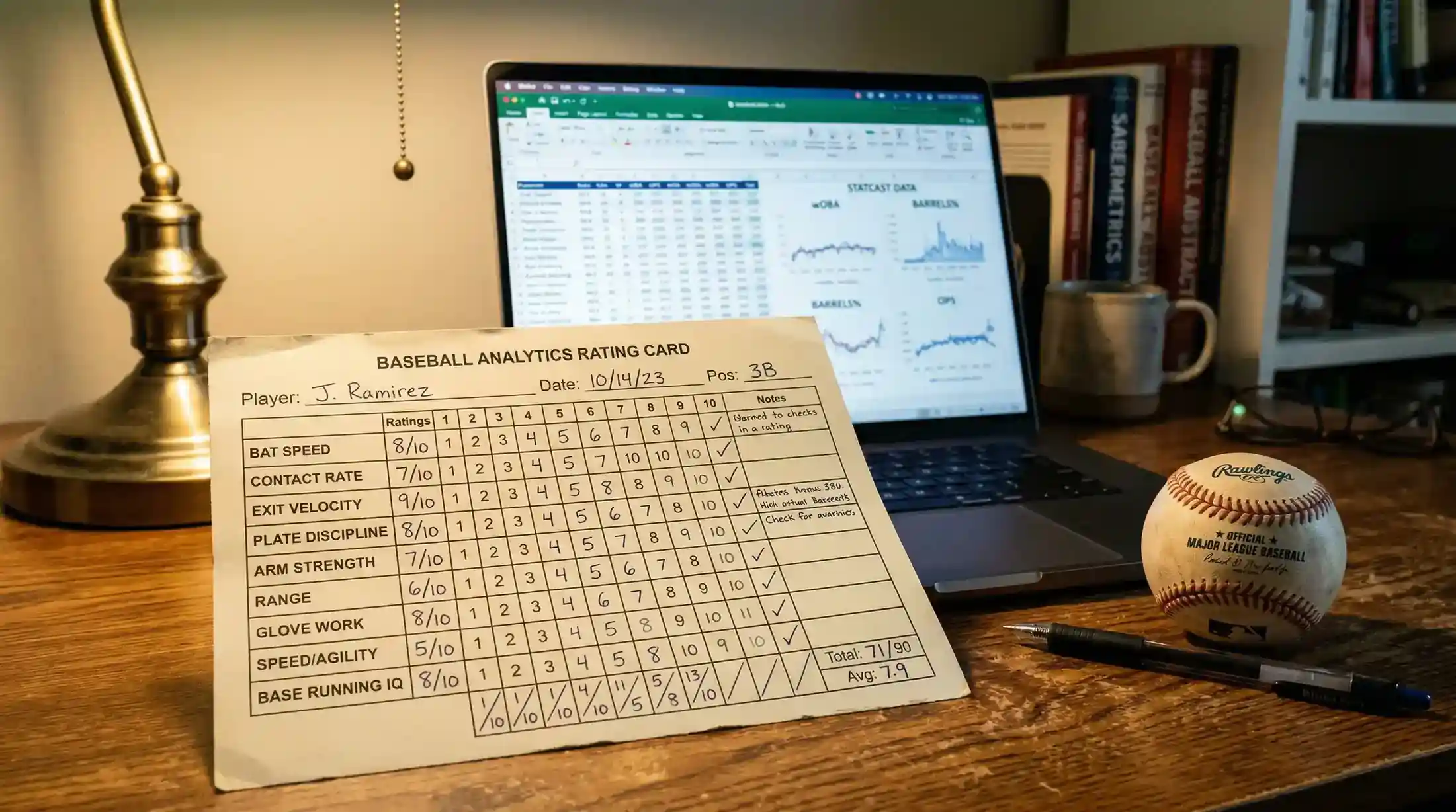
6. Does my projected K total exceed the line by at least 0.5? This is the value filter. Even if every other box is ticked, the bet is not worth placing if the line is set accurately. I need daylight between my projection and the market’s number. Half a strikeout of edge is the minimum gap I require to justify the risk after accounting for the vig.
I print this checklist and keep it next to my laptop during the season. That sounds old-fashioned, and it is. But the physical act of checking boxes slows me down just enough to avoid impulse bets — which, over eleven years of doing this, have been responsible for more losses than bad analysis ever was.
Find all the necessary statistics and daily projections directly at mlb Strikeout Prop Bets.
Five Mistakes That Sink Strikeout Prop Bettors
I have made every one of these mistakes. Some of them more than once. If you recognise yourself in this list, take it as a sign that your process needs tightening — not that you are a bad bettor.
Mistake 1: Ignoring pitch count in favour of talent. A high K/9 does not matter if the pitcher is pulled after 75 pitches, as the RotoBaller analysis team has pointed out repeatedly. Talent creates the opportunity; workload determines whether the opportunity is big enough to cash the over. I have lost count of the overs that died at 4 strikeouts because a manager yanked his starter in the fifth inning. Every K prop bet needs a workload check, full stop.
Mistake 2: Chasing yesterday’s winner. A pitcher throws 11 Ks on Tuesday. By Wednesday morning, his name is all over social media and the K prop recaps. When his next start rolls around five days later, the line is inflated by a full strikeout because the market remembers Tuesday’s explosion. You are not getting value anymore — you are paying a premium for last week’s performance. I catch myself doing this at least twice a month and have to physically step away from the screen.
Mistake 3: Treating every over as equal. An over 5.5 at -115 is a fundamentally different bet from an over 5.5 at -135. The first requires roughly a 53.5% hit rate to break even. The second demands nearly 57.5%. That gap might seem trivial on a single bet, but compounded across a full season of three hundred wagers, it is the difference between a profitable year and a losing one. Always convert the odds to implied probability before deciding.
Mistake 4: Betting volume instead of conviction. On a full Saturday slate with sixteen games, it is tempting to find four or five overs that look decent. But “decent” is not the same as “edge.” Every additional bet you place dilutes the quality of your overall card. I have had my best months when I averaged 1.8 bets per day and my worst months when I averaged 4.2. The numbers are not subtle.
Mistake 5: Ignoring the under entirely. Most K prop bettors are structurally biased towards the over. It is more exciting, the narrative is better, and it feels like you are siding with the talent. But some of the highest-edge situations I have found over the years are unders — a mediocre pitcher whose line is inflated by brand-name recognition, or a high-K starter facing an unusually disciplined lineup on a cold night. The under is not the enemy. The enemy is ignoring half the market.
Why You Need a Results Log
A framework without a feedback loop is just a theory. You need to know whether your bets are winning, by how much, and — most importantly — whether your edge is real or a product of a favourable run.
I started tracking results seriously in my fourth year. Before that, I had a vague sense that I was “doing okay” but no hard numbers to back it up. When I finally built a log and populated it with three months of data, I discovered something uncomfortable: my overall record was positive, but my “gut feeling” bets outside the pipeline were dragging my ROI down by nearly four percentage points. Without the log, I would have kept making those bets and never noticed the leak.
At minimum, record every bet with the date, pitcher, opponent, K line, odds, stake size, and result. Over time, those columns become a map of your strengths and weaknesses. You will see whether you are better at high-K overs or low-K unders, whether your Saturday bets perform differently from your Tuesday bets, and whether certain sportsbooks consistently offer softer lines. For now, the non-negotiable point is this: if you are not logging, you are guessing about whether your strategy works.
FAQ
How many strikeout props should I bet per day to stay disciplined?
I cap myself at three bets per day during the regular season. On most days, the pipeline produces two. Some days it produces zero, and that is fine. The temptation to force bets on a full slate is real, but volume without conviction is the fastest way to erode your bankroll. If the filters leave you with nothing, step away and come back tomorrow — the season is 162 games long.
What is the correlation between game total and strikeout props?
Low game totals signal pitcher-dominant environments, which tend to produce more strikeouts. When the market sets a total below 7.5, it is implicitly pricing in strong pitching — deeper outings, more counts going to two strikes, and more swing-and-miss. I use the game total as a pre-screening tool: overs become more attractive in low-total games, and I treat totals above 9 as a caution flag for K prop overs.
Should I specialise in K props or bet multiple MLB markets?
Specialisation wins. The edge in K props comes from depth of knowledge — understanding SwStr% thresholds, pitch count trends, opponent K-rates by handedness, and line value. Spreading your attention across moneylines, run totals, hit props, and K props dilutes that depth. I focus almost exclusively on strikeout props during the MLB season and leave other markets to people who have built similarly deep frameworks for those bets.
Created by the ”mlb Strikeout Prop Bets” editorial team.