Bankroll Management and Staking Plans for Strikeout Props
 Available in US

Implementing Kelly Criterion Models for K Prop Staking
June 2021 taught me a lesson I should have learned years earlier. I hit 60% of my K-prop overs that month — a win rate most bettors would celebrate. But I finished the month down. The reason was embarrassingly simple: I had bet 3 units on the two biggest losers and 0.5 units on most of the winners. My sizing was backwards. I was betting big when I felt excited and small when I felt cautious, and excitement and caution had no correlation with actual edge. That month ended my freelance approach to staking and forced me into a structured system.
K-prop betting has a unique bankroll challenge compared to moneylines or totals. You are betting on a single player’s performance in a single game, which means higher variance per bet. A pitcher can have elite stuff, face a terrible lineup, and still finish with 4 Ks because of an early rain delay or a blister on his index finger. That variance makes proper bankroll management not just advisable but essential for survival.
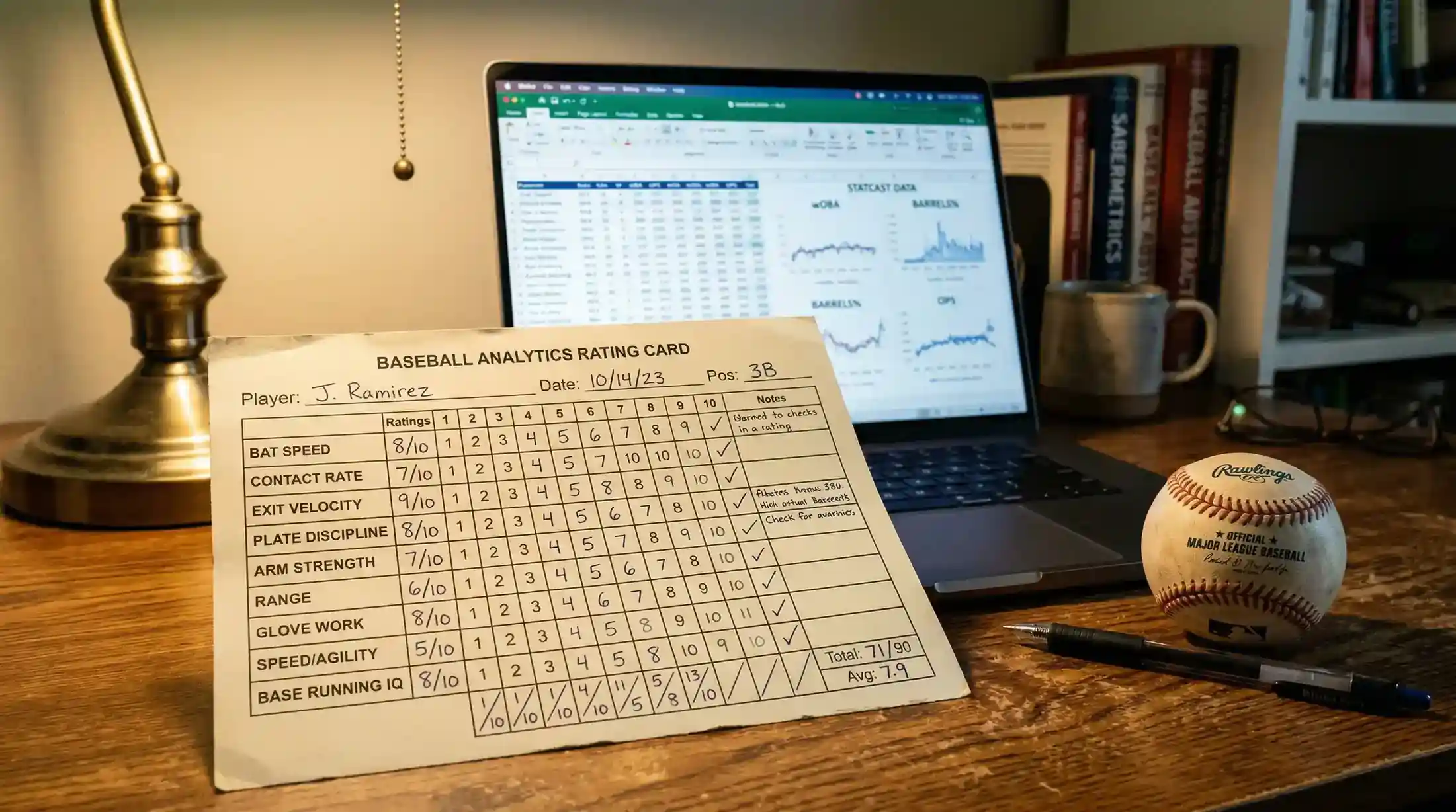
The only way to know if your unit sizing works is to set up a tracking spreadsheet for K-prop bets and monitor your closing line value.
Unit Models: Flat, Tiered, and Kelly
The simplest staking model is flat betting: every bet gets the same size, typically 1-2% of your total bankroll. If you start with a 1,000-unit bankroll and bet 1% per play, every K prop gets 10 units regardless of your conviction level. Flat betting is boring, and that is its strength. It removes the temptation to oversize bets when you feel confident, and it ensures no single loss can damage your bankroll meaningfully. For a bettor making 3-5 K-prop bets per day across a full MLB season, flat betting at 1% provides enough volume to let your edge compound without the risk of ruin that comes from aggressive sizing.
Tiered staking adds a layer of nuance. Instead of one fixed size, you define two or three tiers based on the strength of your edge. A high-conviction bet — where your model shows a clear +EV gap and multiple factors align — gets 2% of bankroll. A standard bet gets 1%. A speculative play — perhaps a ladder bet on a long shot — gets 0.5%. The tiers force you to articulate why one bet deserves more capital than another, which is a useful exercise in discipline even if the sizing differences seem small. My current system uses three tiers: 2% for “A-grade” plays (typically one or two per week), 1% for standard plays, and 0.5% for alt-line or ladder positions.
The Kelly criterion is the mathematically optimal approach, but it requires honest inputs to work properly. The Kelly formula calculates the optimal bet size as: (edge / odds) — specifically, (bp – q) / b, where b is the decimal odds minus 1, p is your estimated probability of winning, and q is 1 – p. The result tells you what fraction of your bankroll to bet. If your model estimates 58% probability on a -110 line, Kelly suggests a bet size of roughly 6.5% of bankroll. The problem is that Kelly assumes your probability estimate is accurate. If you overestimate your edge by even a small margin, Kelly can produce dangerously large bet sizes. Most professionals who use Kelly apply a fractional version — half-Kelly or quarter-Kelly — to buffer against estimation error. For K-prop betting, where individual matchup probabilities are inherently uncertain, quarter-Kelly is the ceiling I would recommend.
Sizing by Conviction: When Your Edge Varies
Not every K-prop bet carries the same expected value. Some matchups scream with edge — an elite whiff pitcher against the league’s worst lineup, with a high-K umpire behind the plate and warm weather. Others are marginal — a decent pitcher against a mediocre lineup with no external-factor advantage. Your staking should reflect that gradient.
RotoWire’s documented K-prop approach posted a 19-6 record over a tracked season, a 76% hit rate. That kind of performance comes not just from picking the right sides but from being selective — only betting the clearest opportunities and skipping the noise. If you bet 8 K props per day with uniform sizing, your overall edge gets diluted by the marginal plays. If you bet 2-3 per day with tiered sizing that concentrates capital on the strongest edges, your ROI per unit risked improves even if your absolute number of winning bets is lower.
I track edge strength using a simple scoring system. Each bet gets a score from 1 to 5 based on five factors: pitcher K-rate rank (1 point if top-15% in MLB), opponent K-rate rank (1 point if top-10 in team K%), umpire alignment (1 point for a high-K ump), weather/venue favourability (1 point for neutral-to-positive conditions), and pitch-count runway (1 point if expected pitch count supports the line comfortably). A score of 4 or 5 gets my highest tier. A score of 3 gets the standard tier. A score of 2 gets the low tier. A score of 1 or below is a skip.
Join the community at our premier MLB strikeout props resource to learn from professional handicappers.
Surviving Drawdowns Without Losing Your Edge
Every K-prop bettor — even a profitable one — will experience losing streaks. The mathematics guarantee it. A bettor with a true 56% win rate at -110 odds will, at some point during a 162-game MLB season, endure a stretch of 8 or 10 consecutive losses. That is not evidence that the model is broken. It is variance doing exactly what variance does.
The danger is not the drawdown itself; it is what you do during the drawdown. The two most common mistakes are increasing bet size to recover losses (chasing) and abandoning the model in favour of gut instinct. Both destroy bankrolls. If your model has been backtested and has demonstrated a positive edge over a meaningful sample, a losing streak is the time to trust the process most, not least.
My drawdown protocol is rigid. If my bankroll drops 15% from its peak, I reduce all bet sizes by one tier (A-grade bets become standard-size, standard becomes low-tier). If it drops 25%, I reduce again and cut my daily bet count to a maximum of two. If it drops 40%, I stop betting entirely for a week and review the model for structural issues. This step-down system prevents ruin while giving the edge time to reassert itself.
One psychological trick that helps: track your performance in units, not in currency. Losing 3 units feels different from losing 150 pounds, even if they are the same amount. Units abstract the emotional weight of money and keep your focus on process rather than outcomes. It sounds small, but in my experience, the bettors who survive long enough to realise their edge are the ones who manage psychology as carefully as they manage arithmetic. For the full framework on how to integrate bankroll discipline into a systematic K-prop approach, the strategy guide covers the complete decision pipeline.
What unit size should I use for strikeout prop bets?
A standard starting point is 1-2% of your total bankroll per bet, using a tiered system that allocates more capital to higher-conviction plays. High-conviction K props (strong matchup, favourable umpire, supportive weather) might warrant 2% of bankroll, while standard plays get 1% and speculative positions get 0.5%. The key is consistency — never size a bet based on excitement or recent results.
Is the Kelly criterion practical for daily K-prop betting?
Full Kelly is impractical because it requires precise probability estimates, and K-prop probabilities are inherently uncertain. Small overestimates of your edge can produce dangerously large bet sizes. Use quarter-Kelly at most — it provides a mathematically grounded framework while buffering against estimation error. For most bettors, a simpler tiered system achieves similar discipline with less computational overhead.
Published by the mlb Strikeout Prop Bets team.