Weather Impact and Temperature Effects on Strikeout Props
 Available in US
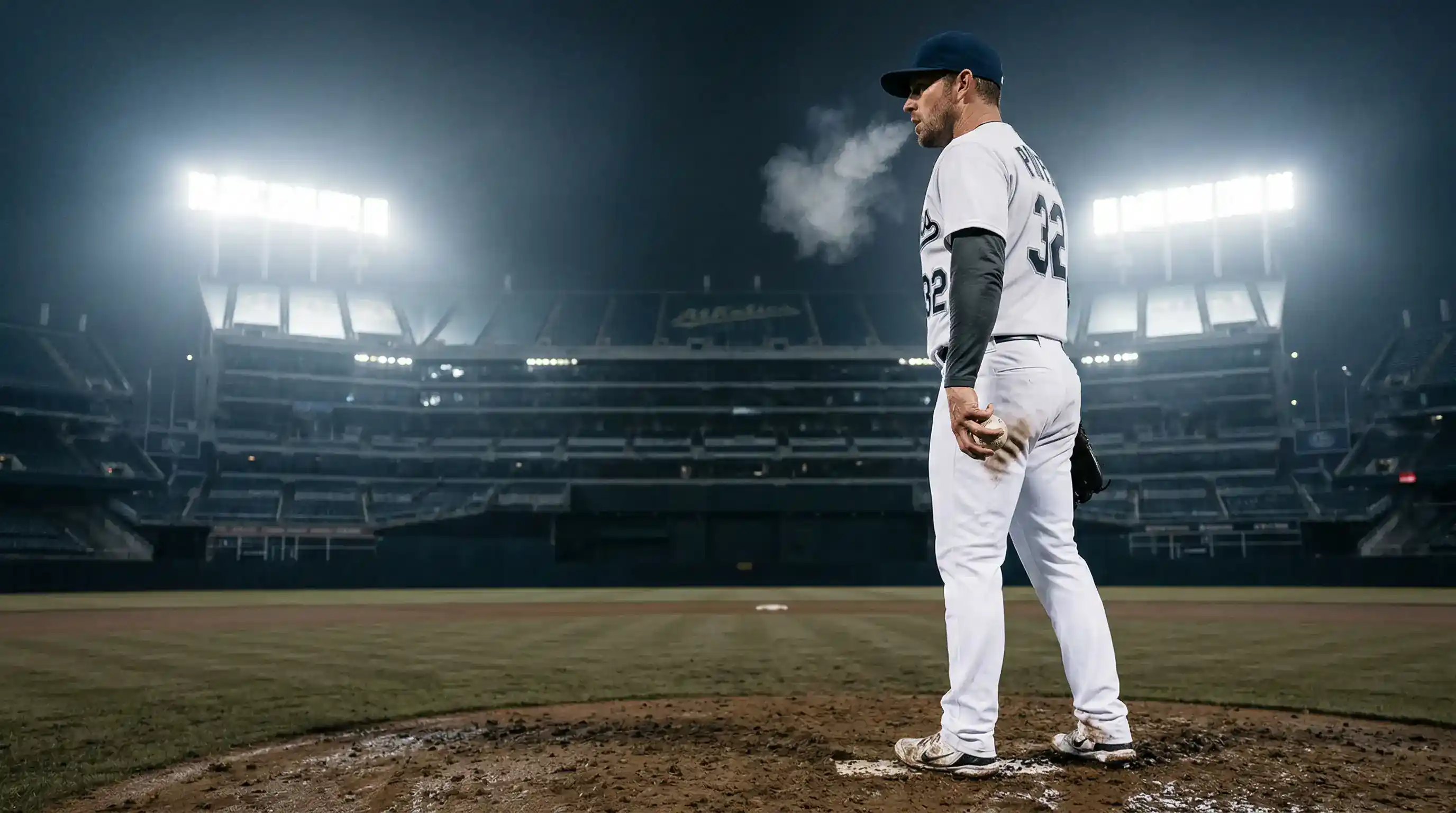
Assessing Humidity and Wind Factors for Pitcher K Props
April 2022, early-season slate. I had three K-prop overs queued up – all strong matchups on paper. Two of the three games were in the upper Midwest, with first-pitch temperatures around 4 degrees Celsius. Every pitcher I backed underperformed his projection by at least two strikeouts. The cold was not a footnote. It was the story.
Cold and dry air makes it harder for pitchers to grip the baseball. That is not speculation – it is a mechanical reality confirmed by spin-rate data across thousands of tracked pitches. Decreased spin rate and reduced control reliably drop strikeout rates, because the pitches that generate whiffs – sliders with sharp break, curveballs with tight spin, changeups with late fade – all depend on precise grip pressure and finger placement. When a pitcher’s fingers are numb or the leather is slick, those pitches flatten out, stay in the zone longer, and get hit rather than missed. Betting the K over in a 3-degree game is fighting physics.
Temperature and Grip: The Primary Weather Factor
Temperature affects strikeout props through two distinct mechanisms. The first is grip quality. Below roughly 10 degrees Celsius, pitcher grip strength declines measurably. Rosin bags help, but they do not fully compensate. The second mechanism is ball density. Cold air is denser, which increases drag on the baseball. Increased drag reduces the velocity of fastballs – typically by 0.5 to 1.0 mph in very cold conditions – and changes the movement profile of breaking pitches. Both effects work against strikeout generation.
The relationship is not perfectly linear. There is a threshold effect: games played between 15 and 30 degrees Celsius show minimal temperature impact on K rates. Below 10 degrees, the effect becomes noticeable. Below 5 degrees, it becomes significant. Above 32 degrees, extreme heat introduces fatigue concerns – particularly for pitchers who are not conditioned for it – but the K-rate impact of heat is less consistent than the K-rate suppression from cold.
For practical betting purposes, I use a simple rule: if the first-pitch temperature is below 8 degrees Celsius, I subtract 0.5 to 1.0 strikeouts from my projected total for each starting pitcher, depending on how breaking-ball-dependent the pitcher is. A fastball-dominant pitcher loses less from cold than a pitcher whose strikeout stuff comes from sliders and curveballs, because fastball command is less grip-sensitive than breaking-ball command. If the temperature is above 30 degrees and the pitcher is not accustomed to extreme heat – say, a Seattle pitcher starting in Texas in July – I watch for early fatigue signals but do not make a blanket adjustment.
Wind and Humidity: Secondary but Real
Wind gets talked about constantly for home run props but almost never for strikeout props. That is a mistake, though the effect is less direct than temperature. Wind blowing in from centre field suppresses offence generally, which can extend games and give pitchers more opportunities to accumulate strikeouts. Wind blowing out has the opposite effect – it can inflate scoring, lead to shorter outings, and reduce K totals even when the pitcher’s stuff looks sharp. The wind effect on K props is primarily about game flow rather than pitch quality.
Humidity is the subtler factor. High humidity softens the baseball slightly and can reduce spin rates by a measurable margin. The effect is smaller than temperature but is additive – a cold, humid night is worse for K generation than a cold, dry one. Dry conditions at altitude (think Denver) have a different profile entirely: the thin air reduces pitch movement, which sounds like it should suppress Ks, but it also increases velocity slightly and can cause hitters to misjudge pitch trajectories. The net effect at Coors Field, for example, is complex and venue-specific rather than fitting a simple weather formula.
Crosswinds are worth monitoring too. A strong crosswind can make it difficult for a pitcher to locate pitches on the corners, pushing him toward the middle of the zone where batters make contact more easily. I have found that games with sustained crosswinds above 25 mph show a measurable dip in called-strike rates, which cascades into fewer strikeouts.
Checking Weather Before Betting: Sources and Timing
The practical challenge with weather-based K-prop adjustments is timing. Weather forecasts change, and a game-time temperature that was predicted to be 12 degrees at noon might shift to 8 degrees by the time the forecast updates at 4 PM. I check weather twice: once when I make my initial projections in the morning, and again roughly two hours before first pitch. If the forecast has shifted materially – more than 3-4 degrees Celsius or a significant wind change – I reassess the bet.
For weather data, I use standard meteorological sources rather than betting-specific tools. The reason is precision: betting-focused weather tools often aggregate data at the city level, but stadiums within the same city can have meaningfully different microclimates. An open-air stadium on a waterfront faces different wind conditions than an inland park surrounded by buildings. General forecasting services let you input the exact stadium coordinates and get location-specific readings.
Dome and retractable-roof stadiums eliminate the weather variable entirely, which is itself useful information. When the weather is poor across most of the day’s slate, domed games become relatively more attractive for K-prop betting because you have removed an uncertainty that is depressing expected K totals everywhere else. I lean into dome games on cold April and September nights when outdoor stadiums are working against me.
One trap I fell into early on: over-adjusting for weather. If a pitcher has elite stuff and is facing a terrible lineup, a slightly cold evening is not going to turn a strong K-over bet into a losing proposition. Weather is a modifier, not a veto. The CLEATZ scoring model, which uses a 7-factor system including weather as one input alongside SwStr%, opponent K%, K/9, recent form, and ballpark factors, treats weather as exactly what it is – one variable among several, weighted proportionally. That is the right approach. Use weather to refine your projection, not to replace it. For a deeper look at how venue-specific conditions – altitude, mound height, batter’s-eye design – create persistent K-rate differences across MLB parks, the article on ballpark strikeout factors covers the structural side of the equation.
Does cold weather help or hurt strikeout overs?
Cold weather hurts strikeout overs. Below roughly 8-10 degrees Celsius, pitcher grip quality declines, spin rates drop, and breaking pitches lose their sharpness. The effect is most pronounced for pitchers who rely heavily on sliders and curveballs. Subtract 0.5 to 1.0 Ks from your projection when first-pitch temperatures fall below 8 degrees.
Which MLB ballparks produce the highest strikeout rates?
Ballpark K-rates depend on altitude, mound height, batter’s-eye design, and foul territory size. Dome stadiums remove weather variability entirely, making them more predictable for K-prop betting. Park-specific K-factors are tracked by advanced analytics sites and should be consulted alongside weather data – venue and weather interact but are separate inputs.
Created by the ”mlb Strikeout Prop Bets” editorial team.